West Virginia University has announced a $5.9 million from the National Science Foundation to support the work of its astrophysicists and their collaborators in the North American Nanohertz Observatory for Gravitational Waves (known as NANOGrav) as they investigate low-frequency gravitational waves using pulsars as highly precise cosmic clocks. The funding will advance efforts to identify the sources of spacetime ripples first detected in 2023, which may include supermassive black hole pairs, echoes from the early universe, or as yet unexplained phenomena. The award also backs the development of pulsar-timing infrastructure and expands hands-on research opportunities for high school, undergraduate, and community college students across the state.
WVU-led effort to study gravitational waves and ripples in spacetime backed by $6M NSF award
WVU researchers probe spacetime ripples with nearly $6M NSF grant
Press Release
West Virginia University
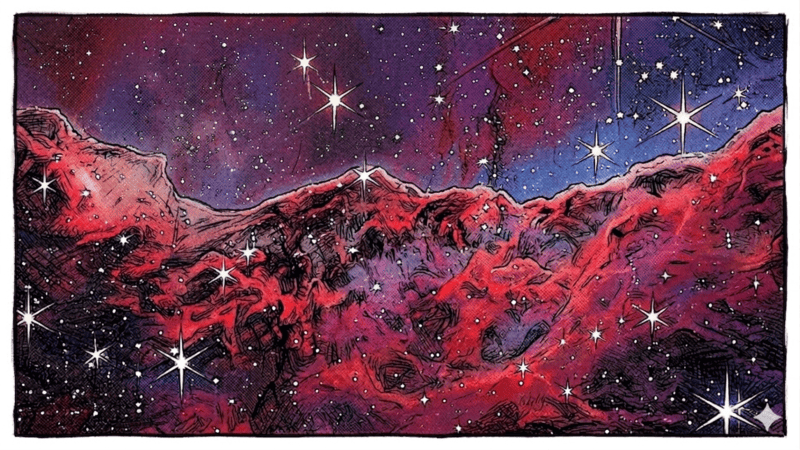
Graphic created from original photo. Credit: Pexels/Frank Cone
This note filed under: Collaboration, Higher Education, Primary & Secondary Education, Research, Science & Technology